
Planned glycol maintenance
Commercial glycol chiller service and maintenance
Planned servicing, condition checks and fault prevention for glycol chillers supporting commercial beer systems, breweries and hospitality operations.
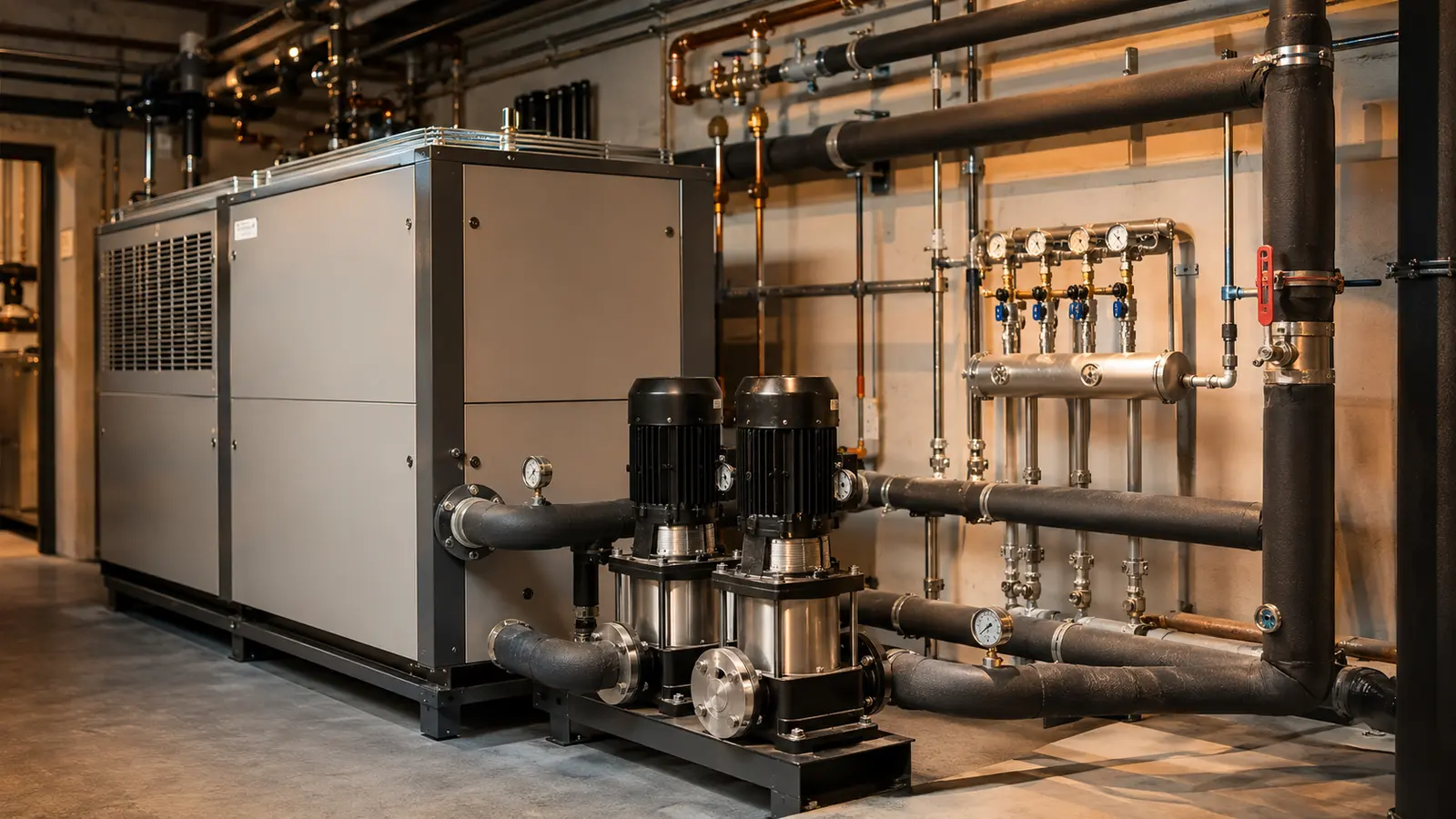
Commercial service
Maintenance should protect cooling capacity before peak trade.
A glycol chiller may continue running while its capacity, flow or heat-rejection performance deteriorates. The first visible symptom is often warm product, foaming or slow recovery when the venue is busiest.
Beer Works assesses the refrigeration circuit, condenser condition, glycol concentration, pump operation, controls, insulation and supply-and-return performance as one system. The maintenance scope is matched to the plant, operating load and consequence of failure.
Service scope
- Condenser, airflow and heat-rejection checks
- Glycol concentration, condition and fluid-level checks
- Pump, motor, noise, vibration and circulation assessment
- Supply and return temperature checks
- Controls, sensors, alarms and electrical condition
- Pipe insulation, leaks, corrosion and condensation inspection
- Operating records and repair recommendations
Where measurements indicate a developing fault, we separate immediate repairs from items that can be planned and budgeted.
Faults and operating risks
Small deterioration becomes a trading problem under load.
Loss of capacity
Dirty condensers, poor ventilation, refrigerant faults and ageing components can extend run time and reduce recovery.
Poor circulation
Pump wear, air, restriction or incorrect glycol condition can leave distant taps or production equipment undercooled.
Controls and sensors
Incorrect readings or control faults can cause short cycling, icing, poor temperature control or nuisance shutdowns.
Leaks and insulation
Fluid leaks and failed vapour sealing create corrosion, condensation, damaged finishes and declining thermal performance.
How we approach the work
Diagnosis before replacement.
Step 1
Establish the operating requirement
Confirm what the chiller serves, peak demand, trading hours and recent symptoms.
Step 2
Inspect and measure
Check refrigeration, heat rejection, fluid condition, circulation, controls and visible distribution components.
Step 3
Prioritise action
Identify urgent faults, planned repairs and maintenance items rather than replacing parts without evidence.
Step 4
Record the condition
Provide clear findings that support future service, budgeting and replacement decisions.
Frequently asked questions
Questions about glycol chiller servicing
How often should a commercial glycol chiller be serviced?
The interval depends on equipment, environment, operating hours and failure consequence. Many commercial systems justify scheduled checks before peak trading and again during the year, with condenser cleaning adjusted to site conditions.
Does glycol chiller maintenance include the beer system?
The scope can include the chiller, pumps, fluid circuit, insulated distribution and relevant beer-system performance. Confirming the full operating problem avoids treating the refrigeration plant in isolation.
Can you repair faults identified during maintenance?
Yes. Minor approved work may be completed during attendance where practical. Larger repairs, replacement components or system modifications are scoped and quoted.
Do you service brewery process glycol systems?
Yes. The assessment is based on the required process temperatures, loads, circulation and operating schedule, not only beer-dispense applications.
Talk to Beer Works
Book glycol chiller maintenance before peak demand.
Send the equipment details, site location, operating hours and any recent temperature or circulation problems.