
Beer Works technical resource
Beer gas pressure guide
Practical commercial guidance on beer gas pressure guide for venue operators, facilities teams and project managers.
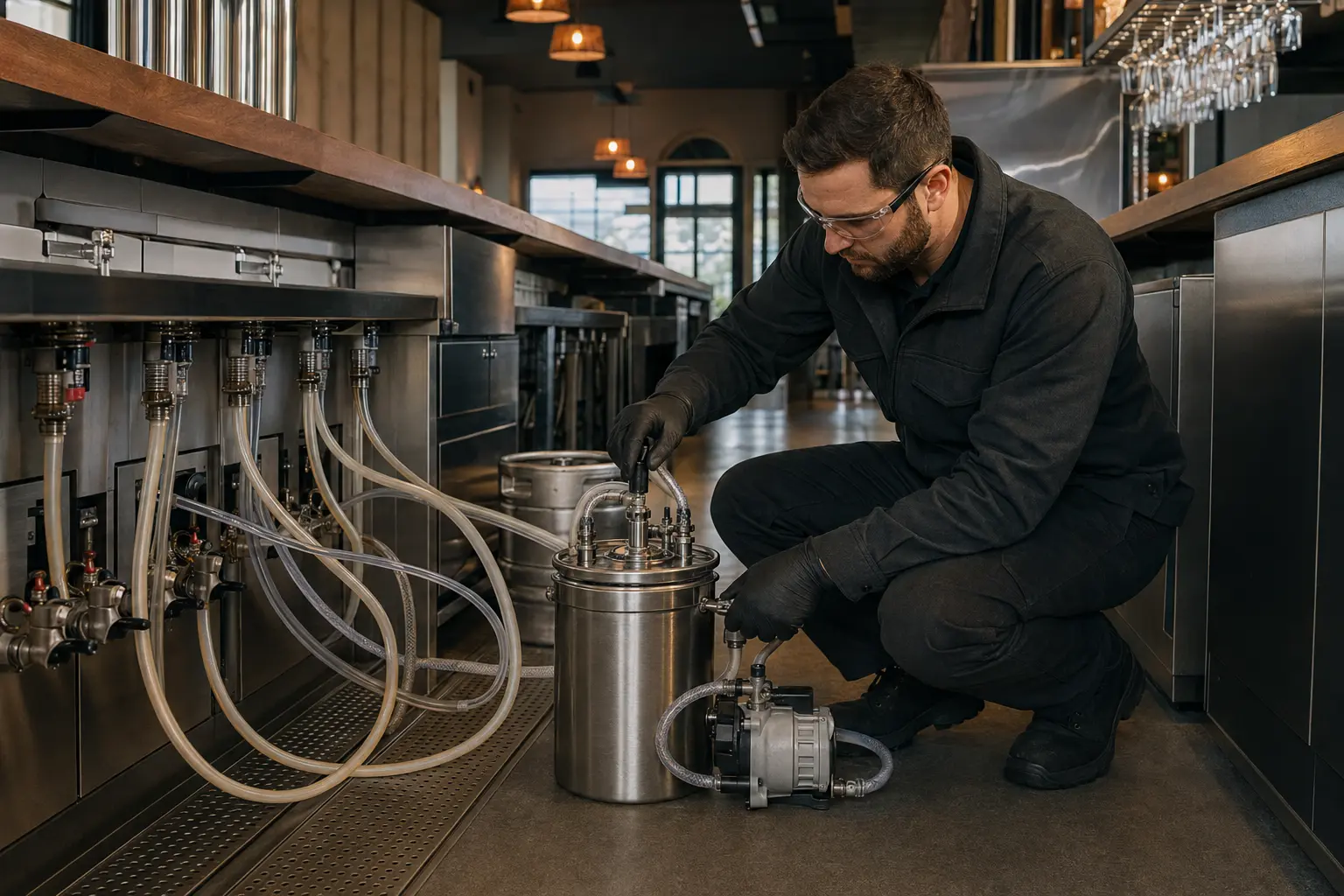
How to use this guide
Use measurements and equipment data, not guesswork.
This guide provides a practical framework for commercial venues. Exact settings and component selections depend on the beer or beverage, manufacturer data, actual temperature, system configuration and site conditions.
Where work involves gas systems, refrigeration, electrical components or changes to installed equipment, use appropriately qualified personnel and follow the manufacturer and site requirements.
Record these basics
- Product and tap affected
- Keg/storage temperature
- Gas type and regulator setting
- Line route, approximate length and elevation
- Glycol chiller and pump condition where applicable
- Photos and model numbers of key equipment
Gas pressure fundamentals
Pressure has two jobs: maintain product condition and move beer to the tap.
Applied pressure must be sufficient to maintain the required carbonation at the actual beer temperature while overcoming the resistance and elevation of the dispense system. Using pressure simply to make beer pour faster is a common way to create instability.
Different products and dispense arrangements can require different settings. Mixed-gas systems add another variable because the gas blend affects equilibrium differently from straight CO₂. Supplier guidance, measured temperature and line design should determine the set point.
Pressure should be measured under operating conditions.
A static gauge reading does not prove that the system can maintain pressure during peak demand. Regulators, changeover equipment, gas lines and supply capacity can all behave differently when several taps are pouring. A technician may need to check both static and dynamic performance.
Leak detection matters commercially.
A small gas leak can cause poor pours, empty cylinders prematurely and create a safety issue in enclosed spaces. Connections, regulators, couplers and gas distribution should be maintained and tested in accordance with the equipment and site requirements.
Frequently asked questions
Technical guide questions
Can one generic setting be used for every commercial beer system?
No. Product condition, temperature, line resistance, elevation, gas type and equipment all affect the correct operating settings.
Why record measurements before changing settings?
A baseline makes it possible to identify the cause of the fault and verify whether a change improved the system.
Can Beer Works assess an existing system?
Yes. We can inspect commercial beer, glycol and related refrigeration systems and recommend repair, adjustment or replacement where required.
Related Beer Works capability
Useful next pages
Talk to Beer Works
Need the system assessed, repaired or redesigned?
Send the site, equipment details, tap count and operating problem. For urgent faults, call us directly.