
Beer Works technical resource
Beer temperature guide
Practical commercial guidance on beer temperature guide for venue operators, facilities teams and project managers.
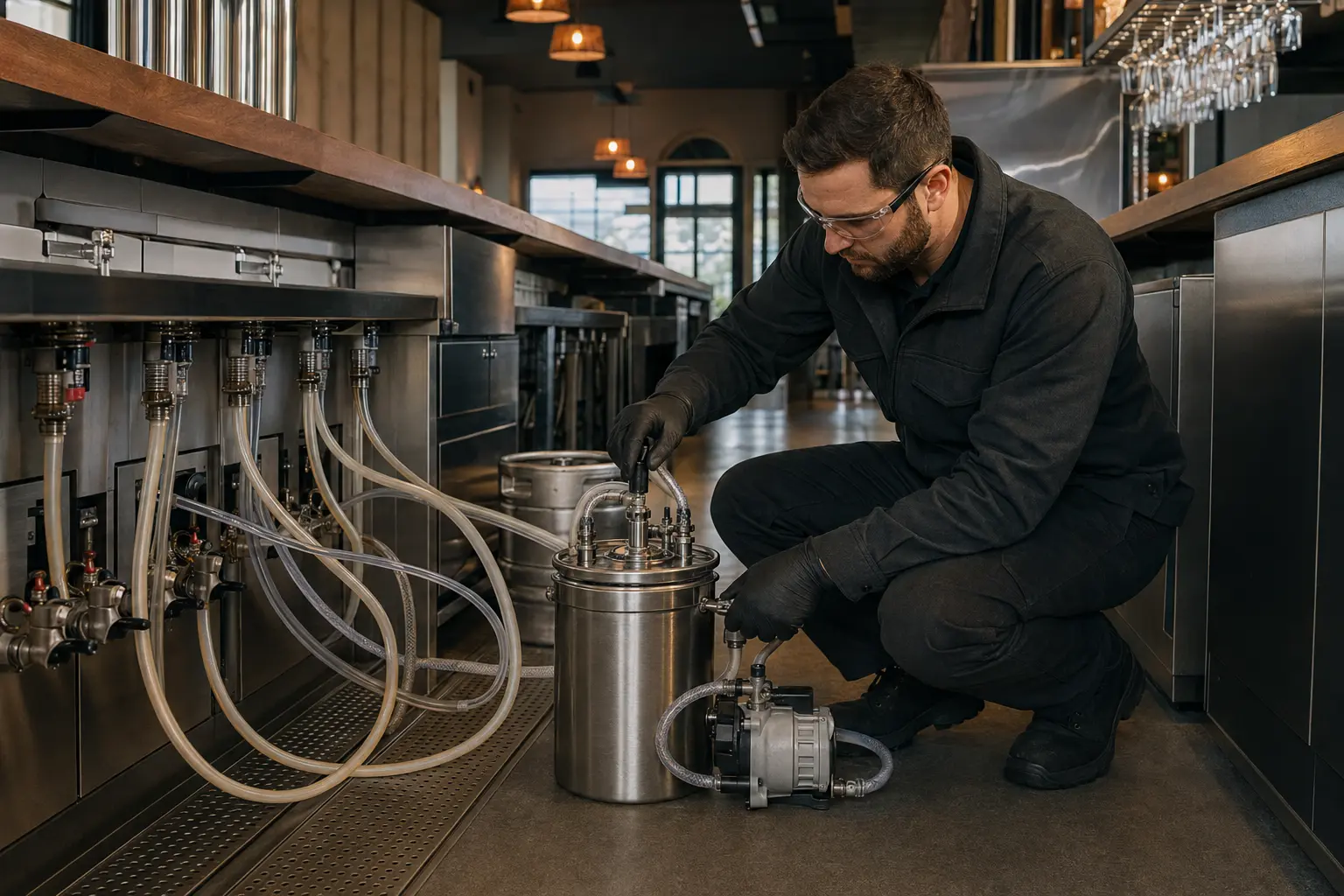
How to use this guide
Use measurements and equipment data, not guesswork.
This guide provides a practical framework for commercial venues. Exact settings and component selections depend on the beer or beverage, manufacturer data, actual temperature, system configuration and site conditions.
Where work involves gas systems, refrigeration, electrical components or changes to installed equipment, use appropriately qualified personnel and follow the manufacturer and site requirements.
Record these basics
- Product and tap affected
- Keg/storage temperature
- Gas type and regulator setting
- Line route, approximate length and elevation
- Glycol chiller and pump condition where applicable
- Photos and model numbers of key equipment
Temperature fundamentals
Measure the product, not just the room display.
Beer temperature affects carbonation equilibrium and foam behaviour. The temperature shown on a cool-room controller may not equal the temperature of the beer inside a keg, particularly after delivery, heavy trading, door opening or a refrigeration fault.
For diagnosis, compare storage temperature, glycol supply and return temperature where applicable, and the temperature of beer at the tap. A large increase between storage and dispense points points toward heat gain in the line, python or font.
Consistency matters more than chasing an arbitrary number.
The appropriate serving temperature depends on product requirements and venue preference, but the system must be designed and balanced around the actual target. Repeatedly changing refrigeration set points to compensate for a pressure or line problem can create freezing, condensation and unnecessary energy use.
Frequently asked questions
Technical guide questions
Can one generic setting be used for every commercial beer system?
No. Product condition, temperature, line resistance, elevation, gas type and equipment all affect the correct operating settings.
Why record measurements before changing settings?
A baseline makes it possible to identify the cause of the fault and verify whether a change improved the system.
Can Beer Works assess an existing system?
Yes. We can inspect commercial beer, glycol and related refrigeration systems and recommend repair, adjustment or replacement where required.
Related Beer Works capability
Useful next pages
Talk to Beer Works
Need the system assessed, repaired or redesigned?
Send the site, equipment details, tap count and operating problem. For urgent faults, call us directly.