
Glycol fault finding
Why a commercial glycol chiller stops cooling properly
Poor glycol temperature is a symptom. The underlying cause may be refrigeration, circulation, heat rejection, controls or increased system load.
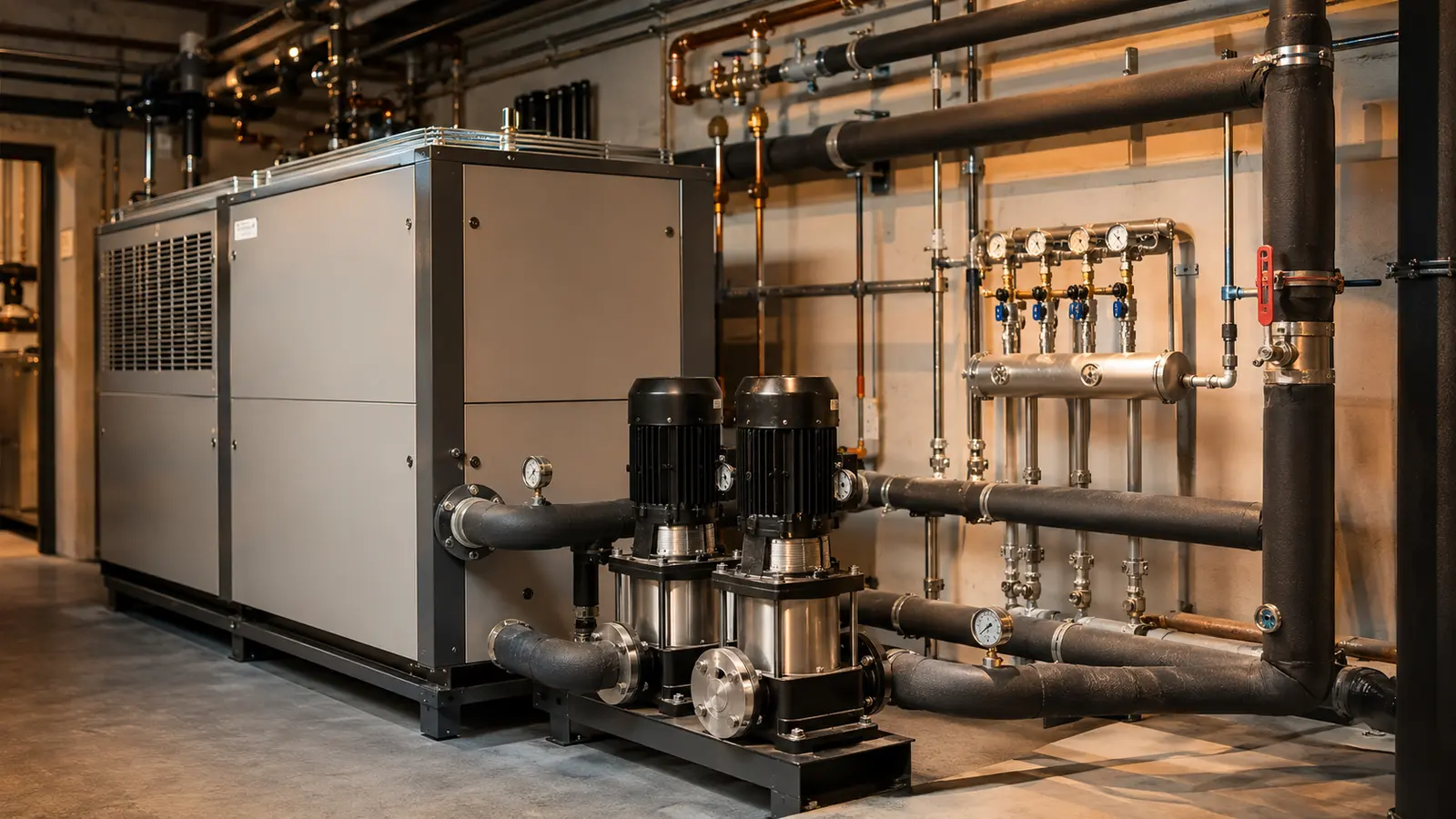
Confirm the symptom under real load
A chiller may reach setpoint overnight but fail during service or production. Record supply and return temperatures, time of day, connected load and whether the problem affects the whole system or only one branch.
Do not assume the displayed temperature is correct. Sensor location, calibration and poor fluid circulation can create misleading readings.
Restricted heat rejection
Dirty condensers, failed fans, hot plant rooms and recirculated discharge air reduce the chiller's ability to reject heat. The result can be high pressure, long run times, alarms and reduced cooling capacity.
This problem is often worse during Queensland summer conditions and peak venue load.
Refrigeration-system faults
Low refrigerant charge, restrictions, compressor deterioration, control faults and heat-exchanger problems can reduce capacity. A qualified refrigeration technician should diagnose the circuit using measured evidence.
Repeatedly resetting the plant or adding refrigerant without locating the fault does not resolve the cause.
Poor glycol circulation
A weak pump, air in the circuit, blocked strainers, incorrect valve position or pipe restriction can prevent cold fluid reaching the load. The chiller itself may appear cold while the remote equipment remains warm.
Compare pump operation and supply-and-return behaviour across the circuit rather than focusing only on the refrigeration cabinet.
Incorrect fluid condition
Glycol concentration that is unsuitable for the application can affect viscosity, heat transfer and freeze protection. Contamination and repeated dilution also change performance.
Fluid condition should be checked against the equipment and process requirements before corrective action is selected.
The connected load has increased
Extra taps, longer trading hours, added tanks, warmer incoming product or building changes can push a previously adequate chiller beyond its capacity.
If the plant operates correctly but cannot recover under the current load, the remedy may be system modification or increased capacity rather than repair.
Use a system-based diagnosis
The useful question is not simply whether the compressor runs. It is whether the complete glycol system delivers the required temperature and flow to every critical load during the busiest operating period.
A proper diagnosis prevents unnecessary component replacement and shows whether the next action is maintenance, repair, rebalancing or plant upgrade.
Need commercial assistance?
Beer Works provides commercial beer-system, glycol, refrigeration, HVAC and electrical capability across South East Queensland. Call (07) 3204 0607 or request service online.