
Beer-line cleaning
How often should commercial beer lines be cleaned?
A practical framework for setting and controlling a commercial beer-line cleaning schedule.
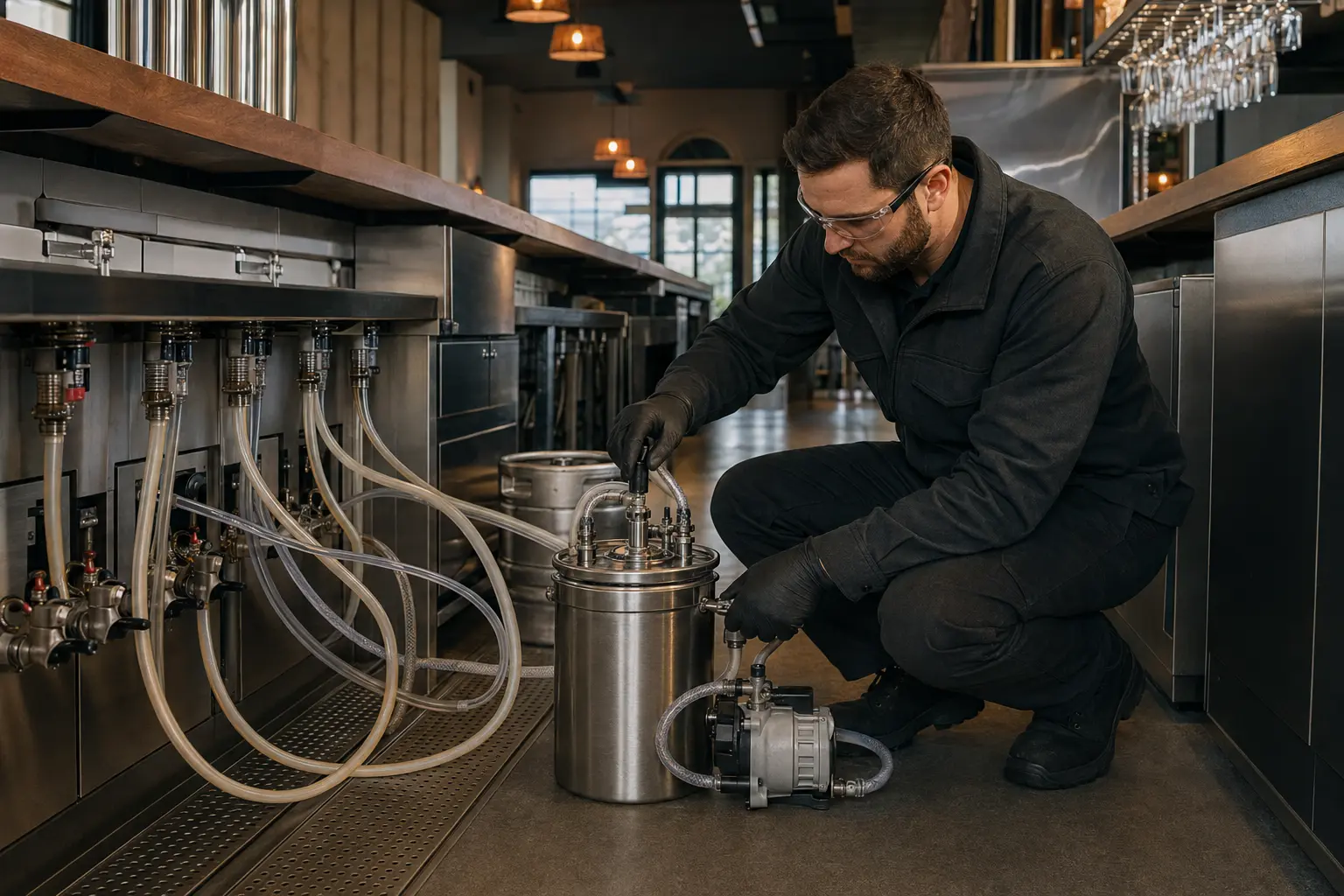
Why cleaning frequency matters
Beer-line cleaning protects taste, presentation and yield. Residue and biological growth can develop inside product lines, couplers, taps and other wetted components. The customer may notice tainted flavour, poor aroma, excessive foam or inconsistent presentation before management sees a mechanical fault.
There is no benefit in stretching the interval until product quality visibly declines. By that point the venue may already have sold poor product and created a harder cleaning task.
Set a documented venue schedule
The cleaning interval should follow brewery requirements, chemical instructions, equipment manufacturer guidance and the risk profile of the venue. Product type, turnover, ambient conditions and line design all matter. Many venues use a weekly or fortnightly cycle, but the correct frequency must be set for the actual system.
Record the date, products, lines cleaned, chemical used, contact time and person completing the work. A visible schedule removes ambiguity during staff changes and gives managers evidence that the program is being maintained.
Cleaning is more than circulating chemical
A reliable procedure includes safe isolation, correct dilution, adequate contact, flushing and verification that no cleaning solution remains. Taps, nozzles, couplers and other contact components must also receive attention.
Chemical strength should never be guessed. Stronger is not automatically better and can damage components or create a safety risk. Use the approved product and process for the equipment.
Use the visit as an inspection
Every clean is an opportunity to check for worn seals, sticking taps, damaged couplers, discoloured lines, pressure instability and slow glycol recovery. Record defects separately so they are repaired rather than repeatedly worked around.
Recurring foam or poor flow after cleaning should trigger diagnosis. Cleaning cannot correct an undersized glycol plant, warm keg room, blocked circulation circuit or incorrect system balance.
Management controls that work
Nominate one person to own the schedule and one backup. Keep the required equipment together, maintain chemical stock and audit the records periodically. For multi-site groups, use the same minimum standard and reporting format at every venue.
If internal completion is inconsistent, move to a scheduled professional program. The commercial test is simple: the program must occur on time, be completed safely and preserve product quality.
Need the system assessed?
Beer Works services commercial beer, glycol and related refrigeration systems across South East Queensland. Call (07) 3204 0607 or email info@beerworks.au.